
Analyse

The firm
Who we are Compliance, advisory, research, training and audit, since 2021. Our team Six partners and managers, AMF-certified and CF-accredited. Our values Integrity, rigour, quality, availability, adaptability, confidentiality.Working with us
Our method Analysis, tailored solution, supported implementation. Our partners FAGACE, for strengthening African SMEs. Join us Positions at the firm and current recruitment.Featured
Every assignment is led by a partner.
Deliverables that hold up to scrutiny, and skills transferred to your teams.
Meet the team →Our six disciplines
Regulatory compliance Regulatory risk, governance, KYC, data protection. Advisory, research and organisation Market studies, risk mapping, records modernisation. Human resources and recruitment Recruitment for your teams, HR organisation, career management. Audit Internal audit, organisational audit, management control. Management and accounting Financial statements, budgets, stock management. Financial engineering Financial structuring and access to funding.Training
Compliance and governance Risk management, compliance, internal audit. Finance and accounting Accounting, finance, audit, management control. Management and leadership Leadership, management, human resources. Digital and technology Digital transformation, ICT, computing. Formats and calendar In-house, open enrolment, sessions announced.Featured
Seven disciplines, one standard.
Training is the seventh: eleven areas covered for ONASA, nine for SHT.
All our expertise →Compliance and audit
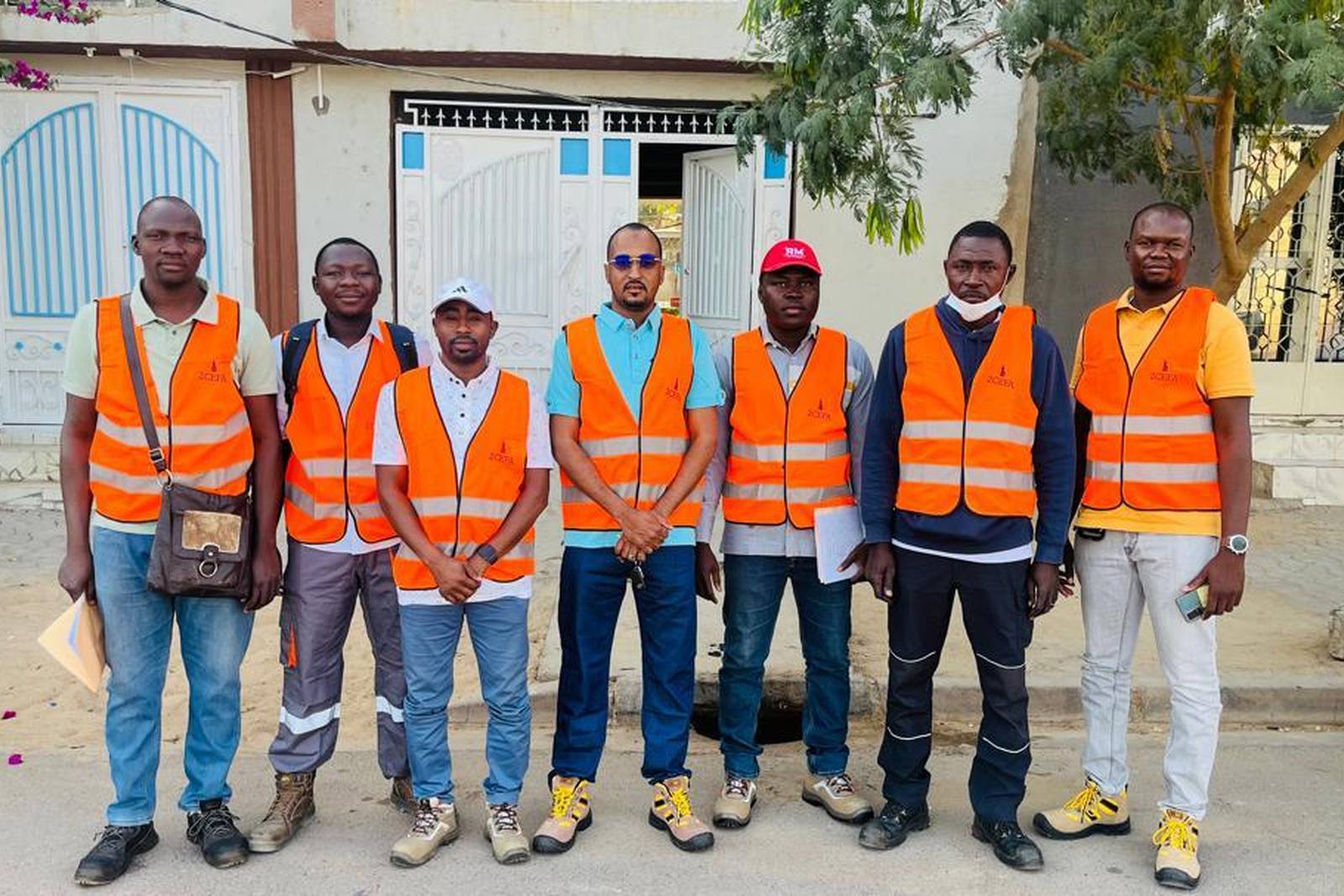
ARSAT Risk mapping of service stations. ADAC Assessment of directorate performance measurement. FNDS Organisational audit of human resources. SONACIM Overhaul of stock management. AGER Supervision of street regrading across N’Djamena.Management and training
ANATS Accounting support, digital archiving and EDM. ATCI Property management and business plan. CARMI Automated queue management. ONASA Three-year training agreement. SHT Capacity building for staff.Featured
Fifteen assignments, four sectors.
Thirteen for public institutions, state agencies or national companies.
All assignments and sectors →Watch and attend
Media Mission photographs, and a video watch of the sector. Calendar Upcoming training sessions announced.Featured
One article a week.
Money laundering, processing delays, recruitment: what goes wrong when it is poorly held.
Read the blog →Anti-money-laundering compliance is not decreed by an internal memo. It is built in a precise order — and that order is not the one you would expect.

Chad has been assessed. From 9 to 27 May 2022, a team from GABAC — the FATF-style regional body covering the CEMAC zone — carried out on site the mutual evaluation of the national framework for combating money laundering and terrorist financing. The report was published in July 2023. It measures two distinct things: technical compliance with the FATF's forty recommendations, and the framework's actual effectiveness.
That distinction is the whole subject. A country — like a company — can have impeccable rules and a framework that produces nothing. It is the most common case, and the most expensive: it gives the feeling of being covered when you are not.
For a bank, a microfinance institution, a professional firm, a company handling flows of funds: the question is not « do we have a procedure? » but « what actually happens when a transaction falls outside the ordinary? » That is the ground of our regulatory compliance expertise.
Many organisations start by drafting a manual. That is the opposite of what is needed. A manual written before looking at your own flows describes an organisation that does not exist.
The order that holds is this. First the risk map: who are our customers, our products, our channels, our geographies, and where is the exposure concentrated. This map is not one more document — it is what justifies everything else, and it is the first thing an inspector asks for.
Then customer due diligence. Identify the customer, understand the purpose of the relationship, know who the beneficial owner is — that is, the natural person who ultimately owns or controls. This is where most frameworks stop, because it is the most uncomfortable point to hold in front of an important client.
Only then, the written procedures, transaction monitoring and the suspicious transaction reporting chain. Written last, they describe what exists.

The first: nobody can say how many suspicious transaction reports were filed last year. The second: the procedure exists, but no front-desk officer has ever read it. The third: the compliance officer reports to the person whose decisions they are supposed to check.
None of the three needs an audit to be established. They are visible in half a day.
We trained the managers of the Banque Commerciale du Chari across four areas, including customer due diligence — the KYC Specialist certification. Training is not an add-on to compliance: in an anti-money-laundering framework, it is the officer at the counter who detects, or nobody detects.
That is also why our training programmes run over time rather than as a single session. A framework is built in this order, it is maintained, and it is checked.
Risk may open a discussion; it is method that must close it. See what that looks like in our assignment at the Banque Commerciale du Chari.
Read also
Analyse

Analyse
Retour de mission